Thursday, February 1, 2018

Nintendo confirms that Mario Kart is coming to Mobile Devices in 2019

In recent years, Nintendo has released lots of games for Android. It brought titles like New Super Mario Brothers and Super Mario Galaxy to the NVIDIA Shield TV in China, and unless you've been living under a rock, you've probably heard of Miitomo, Pokémon Go, Super Mario Run, Fire Emblem Heros, and Animal Crossing: Pocket Camp. It's a remarkable pivot for the 128-year-old Japanese company, which until 2015 largely eschewed smartphones in favor of portable consoles like the 3DS.

It's not planning to dial things back anytime soon, it seems. On Thursday, the Nintendo of America Twitter account teased Mario Kart Tour, a new mobile app that's scheduled to be released before the fiscal year ending in March 2019.

Note that the tweet says fiscal year 2019, which means Mario Kart Tour could theoretically be released any day between April 2018 and March 2019. Given the timing of the announcement, though, it seems likely it'll launch closer to 2019.

Just about everything regarding Mario Kart Tour is a mystery. It's unclear how much it'll cost, for instance, and whether it'll adopt systems similar to Animal Crossing and Pokémon Go, which offer in-app purchases for non-essential items. And Nintendo's being coy about the gameplay  — it hasn't released anything but the logo in Thursday's tweet.

In any case, the app's popularity is virtually guaranteed. Mario Kart is among the company's most popular franchises — Nintendo shipped eight million copies of Mario Kart 8 Delux for the Nintendo Switch, and more than 100 million copies of Mario Kart games have been sold worldwide to date.

We're expecting to learn more about Mario Kart Tour the coming months, so be sure to keep an eye out on Nintendo's Twitter account and our news portal.


from xda-developers http://ift.tt/2BLPhQH
via IFTTT

[Update: Live in Chrome Canary] Google Chrome for Android will Soon Support Password Exporting

2/1/2018: The password export feature is live in the latest Chrome Canary and Chromium nightly builds. You can enable it by toggling on the Pasword Import and Password Export flags in chrome://flags.

It's a little hard to believe, but it's been almost five years since Google released Chrome for Android. Since then, the mobile port of Google's popular web browser has replaced the stock Android Open Source Project (AOSP) browser on most Android phones, received countless updates, and become one of the most-downloaded browsers on Android. Now, it's gaining a new feature: Password exporting.

Last month, we reported on Google Chrome's option to view saved passwords, which lets you view your passwords without having to sign into your Google account or visit the Google Passwords website. A new commit in the Google Git shows that Google plans to expand on that feature with a built-in password exporter tool.

Here's the commit's description:

[Android settings] Add a menu item to export passwords

This CL adds a menu item, behind an off-by-default feature, for exporting passwords from Chrome's settings. The menu item currently does not perform any action.

When the feature goes live, you'll see an Export passwords option in the top-right corner of the Passwords page in the Chrome Settings menu. Tapping on it will start the export process, which will prompt you for your lockscreen passowrd and download a CSV file of your saved passwords to your smartphone. (The commit doesn't specify the format of the file, unfortunately, but it presumably isn't proprietary.)

Google Chrome Export Passwords Google Chrome Export Passwords

Chrome's passwords exporter will be a welcome addition to a robust web browser. With increasing competition from third-party web browsers such as Samsung Internet, Firefox Quantum, and Microsoft Edge, Google's wise to keep adding features that attract users to its ecosystem. The Google Git commit shows the search giant is doing just that.


Source: Google Git


from xda-developers http://ift.tt/2ipAveM
via IFTTT

Google Dialer Voicemail Transcription Starting to Roll Out More Widely for T-Mobile Users

In 2016 Google, added support for Verizon's Visual Voicemail service to the Google Dialer application, saving subscribers who paid a monthly fee the trouble of having to dial into their voicemail inboxes. Late last year, Google rolled out an update to the app that laid the groundwork for visual voicemail support on additional carriers. And sure enough, some T-Mobile customers are seeing voicemail transcriptions in the Google Dialer.

This week, several T-Mobile subscribers in the XDA community, including an XDA Portal staff member, received a prompt about the Google Dialer's visual voicemail feature. It gives the option of enabling it, or leaving it disabled. "See an listen to your messages, without having to call voicemail," the prompt reads. "Transcripts of your voicemail are provided by Google's free transcription service."


If you've used Google Voice, the new voicemail transcription feature might look familiar. Here's how it works: Google's servers analyze your incoming voicemail, transcribe it to text, and deliver the transcription and audio recording to the Google Dialer app. Once visual voicemail is enabled, the process is entirely automatic — a transcription appears seconds after you receive a voicemail.

It's important to note that the Google Dialer's visual voicemail integration isn't the same as Android 8.0 Oreo's VisualVoicemailService API, which extends support for OMPT and similar services to third-party dialer apps. It, like the newest version of the Google Dialer, can handle incoming voicemails, control the playback of voicemails, and allow apps to delete them, but it was implemented in API level 26 — if you're on Android Nougat or an earlier version of Android, apps that require it won't work on your smartphone.

T-Mobile and Google have yet to confirm the rollout of visual voicemail in the Google Dialer, but if the reports so far are any indication, it won't be long before it comes to more subscribers.

Phone (Free, Google Play) →


from xda-developers http://ift.tt/2DVbSjN
via IFTTT

Telegram X is an Experimental Version of Telegram Written from Scratch

New apps benefit from clean and optimized code, assuming they were developed by a competent team. Over time, though, as new features get added to the original codebase, they run the risk of becoming bloated. That's why the folks behind messaging app Telegram launched a new app, Telegram X, that's been written entirely from scratch.

"Our mission is to make Telegram faster, slicker and easier to use with each passing month," the Telegram team wrote in a blog post published Wednesday. "This is why for the last two years we've been developing a new generation of Telegram clients in parallel with the main versions […] The Telegram X project features apps […] with an entirely new code base and without all the legacy components that […] have accumulated through the years."

telegram x

The idea behind Telegram X, which is based on the Telegram Database Library (TDLib), sprung from an internal competition, and it aims to improve Telegram's "speed", "ease of use", and "quality of animations". To that end, it's "faster" and more "power-efficient" than the standard Telegram client, and features a "bubble-free" messages view that expands photos to full size. A new preview feature in the forwarding, sharing, calls, and "groups in common" menus lets you tap and hold on any chat to preview new messages, and new gesture shortcuts let you quickly switch between tabs and launch Telegram's forwarding menu with a single swipe. Finally, there's a redesigned music player and attachment menu, and new profile pages with shortcuts to media you've shared.

As a reminder, Telegram X is an experimental application and might not replace the existing Telegram app. "[Telegram X] is experimental and may or may not eventually replace the existing official apps," the team wrote. "But even if they don't, they will speed up the development of Telegram by allowing us to quickly test new approaches and technologies."

Telegram X (Free, Google Play) →


Source: Telegram


from xda-developers http://ift.tt/2E8lHtK
via IFTTT

Shield Experience 6.3 for NVIDIA Shield TV Adds Spectre Mitigations, Apps, and More

It's been a few months since the NVIDIA Shield TV's last major software update, but the team's been working hard to fix bugs and add new features to the set-top box. Shield Experience 6.3, which started rolling out this week, includes mitigations for the Spectre vulnerability, application updates, and region-specific changes.

First up are updated Shield TV apps. The Plex client now optionally removes DVR-recorded shows after you've watched them, and the upgraded VLC app supports 360-degree video playback and picture-in-picture mode. And starting with Shield Experience 6.3, Sirius XM and Tidal now ship pre-loaded on the Shield TV.

A number of changes in Shield Experience 6.3 are region-dependent. If you live in the United States, for example, you'll be able to control networked Nest Cameras (try saying, "Show me my front door camera") and 1,000 other smart home devices using the Google Assistant, and you'll see new applications including Cartoon Network, VH1, and Lego TV. Meanwhile, if you live in Europe, you'll get the Eurosport app after the update, or the TV NOW Plus app and Moviestar+ apps if you're in Germany or Spain, respectively.

The rest of the enhancements in Shield Experience 6.3 are heading to all devices regardless of region, and they include the aforementioned Spectre fix, improved Bluetooth and Wi-Fi performance, better low battery reporting for Shield accessories, and more. Here's the full changelog:

Shield Experience 6.3 for the Shield TV Changelog

New Features and Apps to Try on SHIELD

  • PLEX: Automatically remove DVR recorded shows
  • VLC: Adds 360 video and PIP functionality
  • New Apps: Sirius XM, Tidal

[US Only]

  • NEST: View your Nest Cameras on SHIELD using Google Assistant. Say "Show me my front door camera"
  • Smart Home: Control over 1000 devices with Google Assistant
  • New Apps: Cartoon Network, VH1, and Lego TV

[EU]

  • New Apps: Eurosport

[Germany Only]

  • New Apps: TV NOW PLUS

[Spain Only]

  • New Apps: Moviestar+

Additional Enhancements 

  • The latest monthly Android security updates including mitigations for "Spectre" (not known to be vulnerable to "Meltdown"). See NVIDIA Product Security Page for more details
  • Improves reporting for low battery status for SHIELD Accessories
  • Adds new USB compatibility mode for users with attached USB storage/accessories to improve Bluetooth/wireless performance (Settings > System).
  • Support for playback of YUV 8 bit BT 2020 videos
  • Adds developer option for rooted systems to always prefer full system upgrades – recommend for rooted systems
  • SHIELD controller (2017) upgrade to version 1.18
  • SHIELD remote (2017) upgrade to version 1.28
  • SHIELD remote w/ headphone jack upgrade to version 1.22
    • Firmware update for SHIELD remote (rechargeable) to resolve recharging issues. If update fails, connect remote to charging cable and hold Home + Back + Voice Search buttons until LED flashes (~20 seconds)
  • Latest accessory firmware versions:
    • SHIELD controller (2017): v1.18
    • SHIELD controller (2015): v1.96/99/3.71/0.32
    • SHIELD remote (2017): v1.28
    • SHIELD remote (rechargeable): v.1.22

Source: NVIDIA


from xda-developers http://ift.tt/2EtZBzC
via IFTTT

Here’s a list of Samsung Galaxy devices that may receive Android Oreo according to leaked firmware

Android 8.0 Oreo was announced in August of last year. Since then, multiple companies (such as Sony and HTC) have either confirmed which devices will receive the Oreo update, or have started to actually roll out the update (such as OnePlus and Nokia). However, the largest Android smartphone OEM, Samsung, has only rolled out an Android Oreo beta program to its Galaxy S8 and S8+ devices, leaving every other Galaxy device owner in the dark about when to expect the update.

So which Samsung Galaxy devices will actually receive the Android Oreo update? While we don't have a 100% confirmed list, we have put together a list (thanks to help from XDA Senior Member mweinbach) of devices we believe will receive the update based on a deep dive into the framework files of the leaked Oreo beta for the Samsung Galaxy Note 8 (the latest of which can be found here).

Within the framework-res file of the unreleased Note 8 Android Oreo beta, we found a list of XML files that appear to describe the hardware that is present on certain Samsung devices. Most importantly, the titles of these XML files contain the internal code-names of many current Samsung devices. The existence of these XML files isn't proof that the devices listed below will receive Oreo since they could be leftover files, however, the fact that several code-names for unreleased Samsung devices are also mentioned suggests to me that Samsung is experimenting with Oreo on these different devices.

Samsung Galaxy Smartphones that may get Android Oreo

Samsung Galaxy Tablets that may get Android Oreo

The only device that seems out of place in this list is the Samsung Galaxy Tab A 8.0 (gt58) which was released in 2015 with Android 5.0 Lollipop. I'm doubtful it will actually receive Oreo, but Samsung could surprise us. It's also possible that Samsung is merely evaluating an Oreo update for this device, and that such an update will never see the light of day.

Finally, we didn't see any of the following devices listed in the framework files, but given their release dates and the fact that their sister devices will likely receive the update, we can presume that these Samsung Galaxy devices will also get a taste of Android 8.0 Oreo.

Samsung Galaxy Smartphones presumably getting Android 8.0 Oreo


Conclusion

Those are all of the devices that we found in the framework files. Again, this list (save for the 2015 Galaxy Tab A 8.0) lines up pretty closely with the devices you would expect to receive the 8.0 Oreo update. However, nothing is confirmed until Samsung makes a public statement on the matter. Companies can test software releases for any number of devices, but later can them if they decide it won't run reliably on that device.

We're sure that many are disappointed, though not surprised, to see that the Samsung Galaxy S6 isn't on the list. The device is certainly capable of running Android Oreo as evidenced by the numerous unofficial ports on our forums, but whether Samsung wants to invest resources in updating a two and a half year old device is a different story.


from xda-developers http://ift.tt/2s1dsuC
via IFTTT

Chromebooks with Intel chips will soon finally be able to play HD Vudu & Netflix over HDMI

In an effort to prevent piracy, platforms like Netflix and Hulu use encryption and digital rights management schemes to restrict the playback of content on certain devices. However, because of the strictness of some of the requirements, some devices in the wild aren't capable of outputting HD video from these platforms. The reasons can vary — we've covered how phones from manufacturers like OnePlus and ZTE lack the necessary Widevine L1 DRM. But in the case of Chromebooks with Intel processors, high-bandwidth digital content protection (HDCP) is to blame.

HDCP, if you're out of the loop, is a form of Intel-developed copyright protection that encrypts digital audio and video signals traveling over HDMI and DisplayPort connections. It uses an authentication key that prevents non-HDCP-compliant monitors, televisions, PCs, and other hardware from sending or receiving the signals, which poses a real problem for Intel-powered Chromebooks. They lack HDCP support, and so can't output HD video from Netflix, Vudu, and other services.

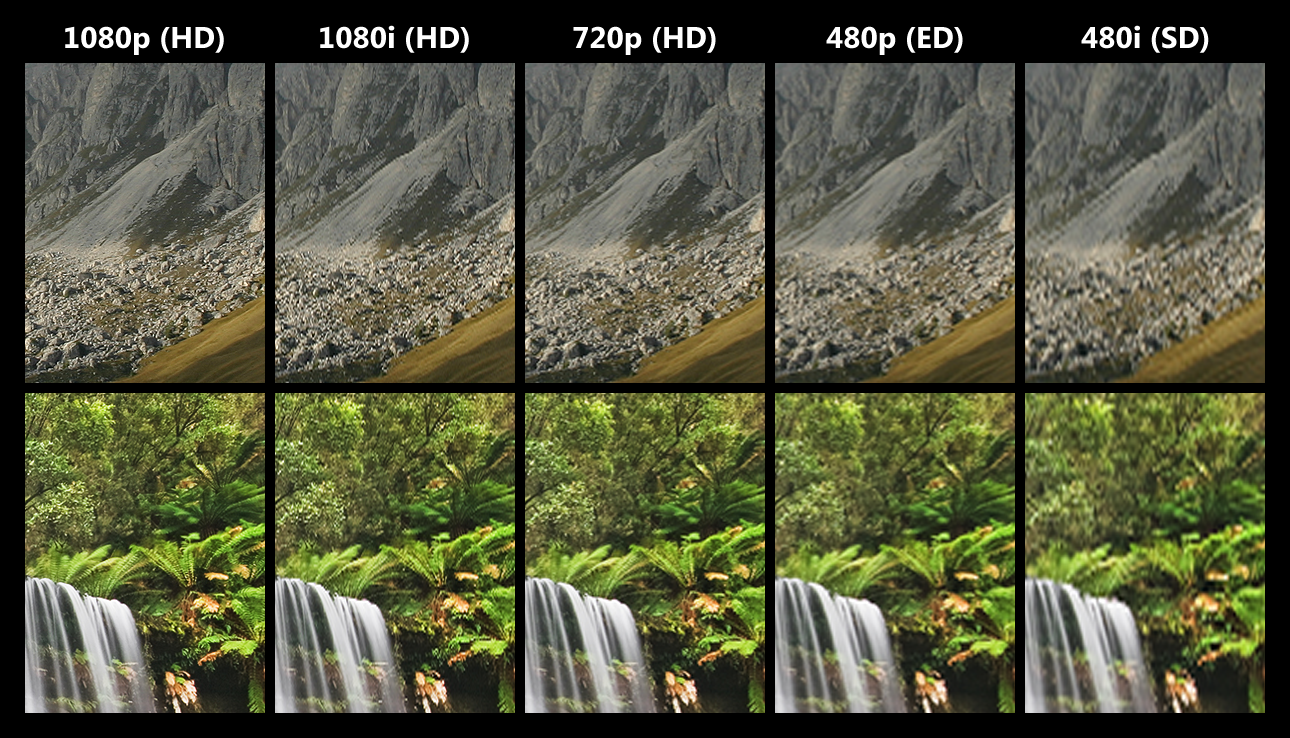
A comparison of HD and SD resolutions. // Source: Wikimedia

A fix for those Chromebooks is on the way, though. New commits in the Chromium Gerrit source code review page imply that Google's adding HDCP support to the Chrome OS kernel.

There are three new commits related to HDCP: Two patches that add support for HDMI and DisplayPort connectors by implementing intel_hdcp_shim, and a patch that adds the framework required for HDCP support on Intel connectors. A future release of Chrome OS will merge the changes and, consequently, bring support for HD video playback over HDMI to Intel-based Chromebooks.

It's not clear yet how soon HDCP support will come to Chrome OS, but it's bound to be a welcome change for folks who hook up their Chromebooks to TV screens. If you'd like to have a look at the code yourself, you can check out all of the HDCP-related commits here, here and here.


from xda-developers http://ift.tt/2nsBDxt
via IFTTT